
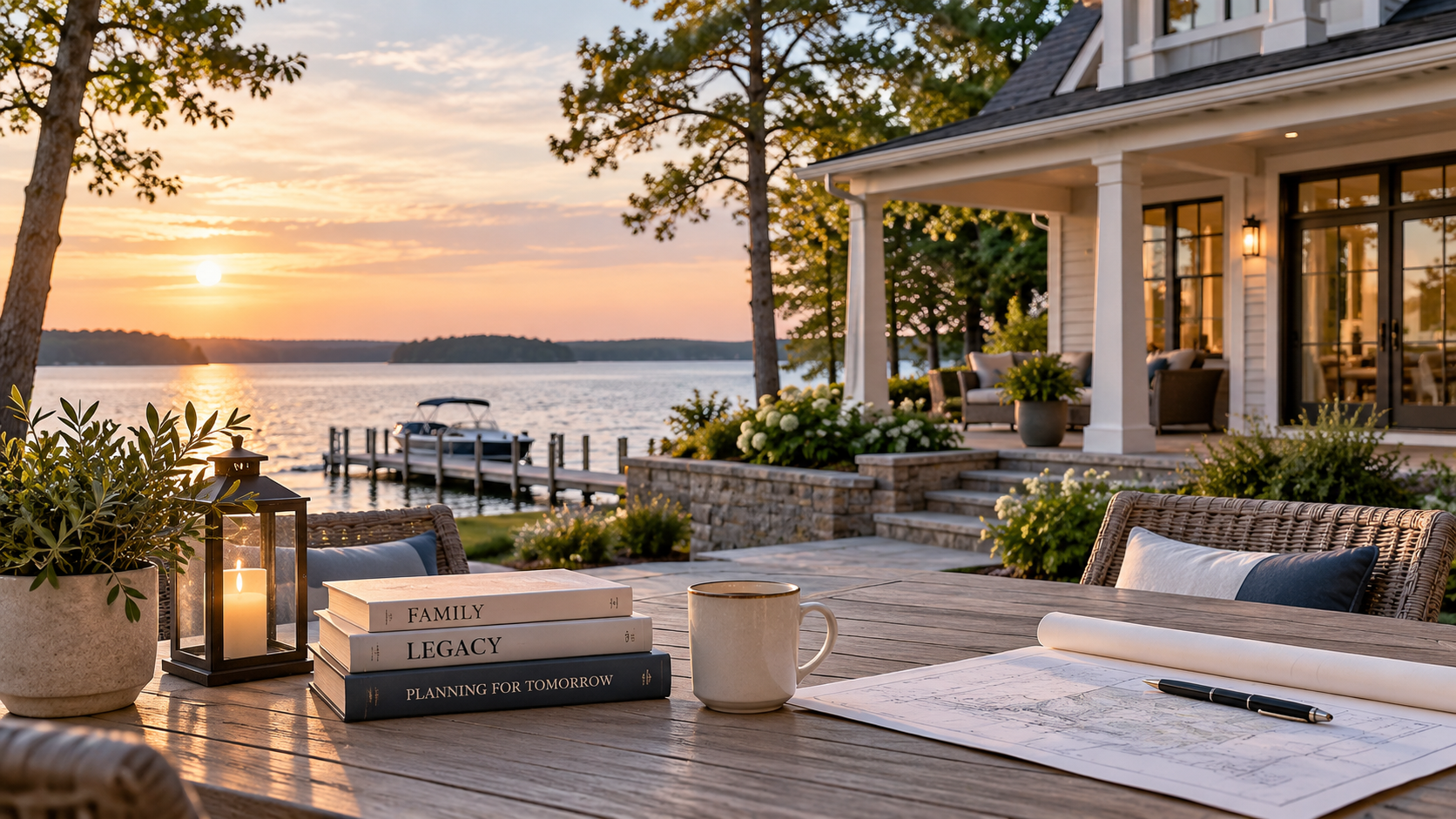
A vacation home, family farm, beach house, mountain property, or longtime family residence can carry a significance that goes far beyond its market value. It may be where children grew up, where several generations gather for holidays, or where a family has spent summers for decades.
That emotional value is exactly what can make these properties difficult to plan for.
Parents may assume their children will want to keep a cherished property in the family. The children may genuinely want that too. But after the property passes to the next generation, practical questions begin: Who gets to use it and when? Who pays the taxes and insurance? Who handles repairs? What happens if the roof needs replacing? Can the property be rented? What if one beneficiary needs money and wants to sell while the others want to keep it?
Without answers, a property intended to bring a family together can become a source of financial strain and conflict.
Good estate planning for a legacy property should address not only who inherits it, but how ownership will actually work after the transfer.
Start by Asking Whether the Family Wants the Property
One of the most important planning questions is also one of the easiest to overlook: Do the intended beneficiaries actually want to own the property?
Parents may envision their children and grandchildren continuing family traditions at a vacation home. The children may love the property but have very different ideas about owning it.
One child may live nearby and use the house regularly. Another may live across the country and visit once every few years. One may be financially comfortable paying a share of annual expenses. Another may have a mortgage, college expenses, or other priorities that make those costs difficult.
A family farm can present similar issues. One child may work the land or have a personal attachment to it, while siblings who live elsewhere may view the property primarily as an asset.
These differences do not necessarily indicate family conflict. They reflect different lives and financial circumstances. Planning should account for those differences before ownership passes to the next generation.
Shared Ownership Needs Rules
Leaving a property equally to several children may appear fair, but equal ownership does not answer the practical questions that come with the property.
Consider three siblings who inherit a beach house equally. One family wants to use it for most of July. Another wants the same weeks because of school schedules. The third rarely visits but expects the other two to compensate them for their greater use.
Now add annual property taxes, insurance, utilities, landscaping, routine maintenance, and an unexpected $40,000 repair.
Equal ownership has not resolved any of those questions. It has simply given all three siblings the authority and responsibility to deal with them.
A plan for shared property should consider how use will be scheduled, how expenses will be allocated, who makes routine decisions, and what level of agreement is required for major expenditures.
The more people who eventually share ownership, the more important those rules become.
Someone Has to Pay for the Property
Legacy properties cost money even when no one is using them.
Property taxes, insurance, utilities, maintenance, repairs, association fees, landscaping, security, and other expenses continue year after year. Older properties may require significant capital improvements.
Parents who want a property preserved for the next generation should consider whether the beneficiaries will realistically be able and willing to fund those expenses.
One solution may be to leave additional assets or establish a reserve to help support the property for a period of time. In other cases, the family may decide that ongoing costs should be shared among the beneficiaries according to an agreed formula.
The plan should also address what happens when someone does not contribute. Should that beneficiary lose certain use rights? Should another family member be able to advance the funds and receive reimbursement later? Should persistent nonpayment trigger a buyout?
Ignoring those questions does not eliminate them. It leaves the beneficiaries to negotiate the answers later.
Use of the Property Can Be as Complicated as Ownership
A vacation home can create conflict even when everyone agrees to keep it.
Families may need rules governing reservation schedules, holidays, guests, pets, maintenance responsibilities, personal belongings, and whether owners can allow friends or extended family to use the property.
Rental presents another issue. One beneficiary may see short-term rentals as a sensible way to offset expenses. Another may strongly object to strangers using a home filled with family possessions.
Improvements can create similar disagreements. One owner may want to renovate the kitchen or add a pool. Another may want to preserve the property exactly as it has always been.
These details may sound too mundane for estate planning, but they are often the issues that determine whether shared ownership works in real life.
A Trust or LLC May Provide a Better Structure
Rather than leaving a property directly to several beneficiaries, some families may benefit from holding it through a trust or limited liability company.
A trust can establish rules for the property’s use, management, expenses, and eventual disposition. A trustee can be given responsibility for administering the property according to those rules.
An LLC may provide a governance structure in which family members own interests in the entity rather than fractional interests in the real estate itself. An operating agreement can address voting, management, transfers, contributions, and buyouts.
Neither structure is automatically the right answer. The appropriate arrangement depends on the property, the family, tax considerations, liability exposure, financing, and long-term goals.
Families with more complicated ownership or wealth-transfer objectives may need to coordinate the property plan with advanced planning strategies rather than treating the real estate as an isolated asset.
Plan for the Family Member Who Wants Out
Even a family that strongly wants to preserve a property should plan for the possibility that someone eventually wants to sell.
A beneficiary may need cash. They may move away, experience financial problems, divorce, or simply lose interest in owning the property. The next generation may feel less connected to it than the current one.
A buyout provision can establish a process for an owner who wants to leave. The plan can address who has the first opportunity to purchase the interest, how the property or ownership interest will be valued, how long the remaining owners have to complete a purchase, and whether payment can occur over time.
Without a defined process, the family may be forced to negotiate valuation and financing when relationships are already strained.
The plan should also confront the harder question: What happens if nobody can afford the buyout?
Sometimes the practical answer is that the property must eventually be sold. Recognizing that possibility in advance can be better than creating a structure that attempts to preserve the property indefinitely at any cost.
Decide How Major Decisions Will Be Made
Shared ownership becomes especially difficult when every decision requires unanimous agreement.
Routine matters may be handled by a designated manager, trustee, or family member. Larger decisions—such as major renovations, substantial borrowing, long-term leases, or sale of the property—may require a majority, supermajority, or unanimous vote.
There is no single voting structure that works for every family. What matters is establishing one before a disagreement occurs.
The plan should also address deadlocks. If two owners want to sell and two refuse, what happens? If one beneficiary believes a major repair is necessary and the others disagree, who decides?
A governance structure is most valuable when it provides a way forward precisely when family members do not agree.
Think Beyond the Children to the Next Generation
A property shared successfully by three siblings can become much more complicated when ownership eventually passes to nine grandchildren.
With each generation, the number of owners may increase while their connection to the property becomes less consistent. Some descendants may have grown up visiting the property. Others may barely know it.
Planning should consider whether ownership interests can pass freely to descendants, spouses, or outsiders. Families may want rights of first refusal, restrictions on transfers, or a process for consolidating ownership over time.
The goal does not have to be keeping the property in the family forever. It should be creating a realistic plan for how ownership can evolve.
The Plan Should Address What Happens at Death
Legacy-property planning also needs to work within the broader estate administration process.
A property may be subject to mortgages, expenses, tax obligations, title issues, or claims against the estate. If several beneficiaries are supposed to receive the property, the executor or trustee needs clear instructions about how and when the transfer should occur.
This is especially important when an estate does not have enough liquidity to pay other obligations without considering the real estate.
Thoughtful planning can make probate and estate administration more manageable and reduce the likelihood that beneficiaries are forced to make major property decisions while also dealing with the death of a family member.
Preserving a Property Requires More Than Preserving the Deed
Families often describe a vacation home, farm, or longtime residence as something they want to “keep in the family.” But keeping a property requires more than transferring legal ownership.
It requires a workable plan for use, expenses, management, decision-making, buyouts, and eventually sale. It also requires an honest assessment of whether future generations will have the financial resources and desire to maintain it.
The most durable plan may preserve the property for generations. In another family, the better plan may provide an orderly way for some beneficiaries to keep it while others receive different assets. In still another, the right plan may acknowledge that the property should eventually be sold.
The goal is not to force future generations to preserve a property. It is to give them a structure that respects the property’s importance without turning that legacy into an obligation they cannot manage.
Miller Legal Group helps families structure estate plans for vacation homes, family residences, farms, and other legacy properties with both the legal transfer and the practical realities of shared ownership in mind. If a meaningful property is part of your family’s estate plan, contact Miller Legal Group to review whether the plan addresses ownership, expenses, management, buyouts, and future sale before those decisions are left to the next generation.